


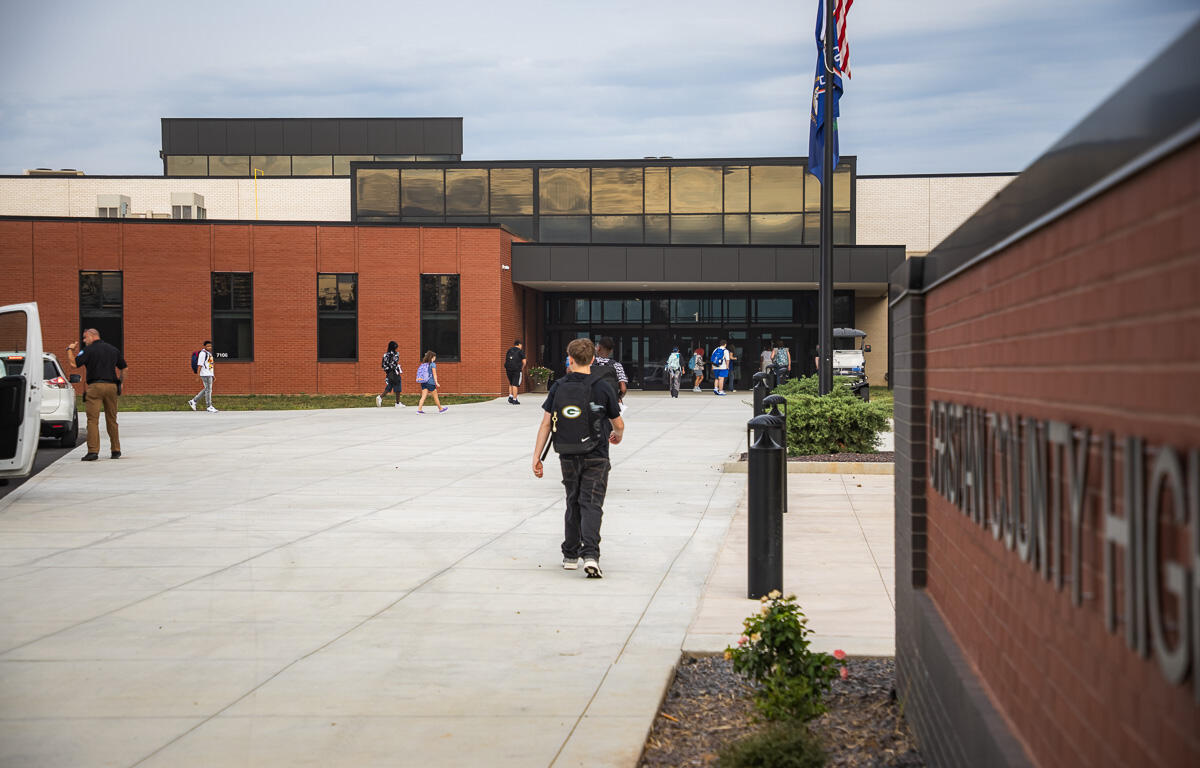

HOPKINSVILLE, KY (CHRISTIAN COUNTY NOW) – Three schools in Christian County have been awarded funding for STEM projects ranging from a video series, working with a 3-D printer and more. Projects submitted by teachers at Christian County High School, Hopkinsville Middle School and Sinking Fork Elementary School will each receive $5,000.
The Tennessee Valley Authority, in partnership with Bicentennial Volunteers Inc., is awarding a total of $1.5 million to educators to develop science, technology, engineering, and math education projects across the Tennessee Valley region. These year, just over 300 projects received funding.
“Inspiring students to pursue STEM careers is essential to building a strong workforce and creating economic opportunity across our region,” said TVA CEO Mike Skaggs in a news release. “These skills can lead to high-paying jobs while helping communities thrive.
Preference was given to grant applications that explored TVA’s primary areas of focus: environment, energy, economic development, and community problem-solving, and any school that receives their power from a local power company served by TVA was eligible to apply in the competitive process.
Christian County High School: Project submitted by John Richards
Exploring STEM Careers in Christian County is a student-produced video series created by the Christian County High School Media Arts / Cinematography and Video Production program.
Over four to six months, students will research, plan, film, and edit 10 to 15 short episodes spotlighting the range of STEM careers available right here in Christian County, from advanced manufacturing and agriculture technology to healthcare, logistics, and skilled trades.
Each episode will be built around an on-site visit to a local employer, an interview with a working STEM professional, and a segment hosted by a former Christian County student who has gone on to pursue a STEM career, connecting current students directly to a relatable role model.
Hopkinsville Middle School: Project submitted by Heather Armentrout
The Problem-to-Product Challenge is an interdisciplinary, hands-on STEM experience connecting HMS Agriculture, STEAM, and business courses across grades 6-8.
More than 600 students will participate in a common innovation cycle in which they identify authentic problems, investigate possible solutions, design and test prototypes, and develop student-designed products.
The grant will provide reusable STEM, agricultural, engineering, technology, prototyping, testing, and product-development materials that allow students to move from an idea to a tangible product. The project will create a sustainable interdisciplinary model that can continue beyond the grant year.
| EDUCATION NEWS: Read more from Christian County Schools
Sinking Fork Elementary School: Project Submitted by Gina Rose
Emergency preparedness is a life skill that everyone must obtain at some point in their life. The earlier a person can learn how to be prepared in case of an emergency, the likelihood of serious injury is minimized.
Using tools like Sphero robots and 3D printers, students can explore scenarios in a safe way and create the best safety plan. Safety engineers from the Christian County Emergency Management will present tips and skills in a student-friendly way on how to stay safe in various emergencies.
Students will use the 3D printer to design and print floor plans of their school and home. They will use the Sphero robots to explore their emergency plans, going through various exit strategies and teaching others about what they can do. 3D printers will also be used to design and print tools that can be placed in a small emergency kit, such as whistles, flashlight clips, first aid organizers, etc.
They will be able to teach families during organized family nights, such as STEAM night and pass out kits in coordination with safety organizations such as the Red Cross and local Fire Departments.
South Christian Elementary School: Project submitted by Angela Ellis
Sky Engineers is a STEM initiative that introduces 4th and 5th-grade students to computer science, robotics, and clean energy infrastructure through indoor autonomous drone flight.
This project turns the classroom or gym space into a simulated power grid inspection mission, eliminating manual piloting risks by using drag-and-drop block coding.
| DOWNLOAD THE APP: Sign up for our free Christian County Now app